
A rotary lobe pump is a positive displacement fluid handling system engineered for controlled transfer of viscous, shear-sensitive, and hygienic process media across industrial manufacturing environments. Unlike centrifugal pumping systems that rely on velocity-based hydraulic movement, a lobe pump operates through volumetric displacement where a fixed quantity of fluid is transferred during each rotor cycle.
Designed to protect product integrity, reduce shear damage, and deliver consistent output even when viscosity or discharge pressure varies during production.
Ideal for pharmaceutical gels, dairy emulsions, syrups, cosmetics, food ingredients and specialty chemicals where hygienic handling is mandatory.

The operating mechanism of a rotary lobe pump is based on two synchronized lobes rotating in opposite directions within a precision-machined casing. During rotation, cavities are created between the rotor lobes and casing wall. These cavities trap fluid at the suction side and move it continuously toward the discharge side.
Since the lobes do not come into direct contact with each other, internal wear is significantly reduced compared to gear-based pumping systems. This non-contact operation also minimizes shear stress acting on the fluid, which becomes essential when handling emulsions, pharmaceutical gels, creams, syrups, and high-viscosity products.
The hydraulic stability achieved through synchronized rotor movement ensures consistent volumetric displacement even under fluctuating process conditions, making lobe pumps highly suitable for batch-controlled manufacturing environments.
Our lobe pumps are engineered to maintain operational reliability, hygiene compliance, and process efficiency across demanding conditions by combining low RPM operation, synchronized rotor geometry, and process-specific fluid handling design.
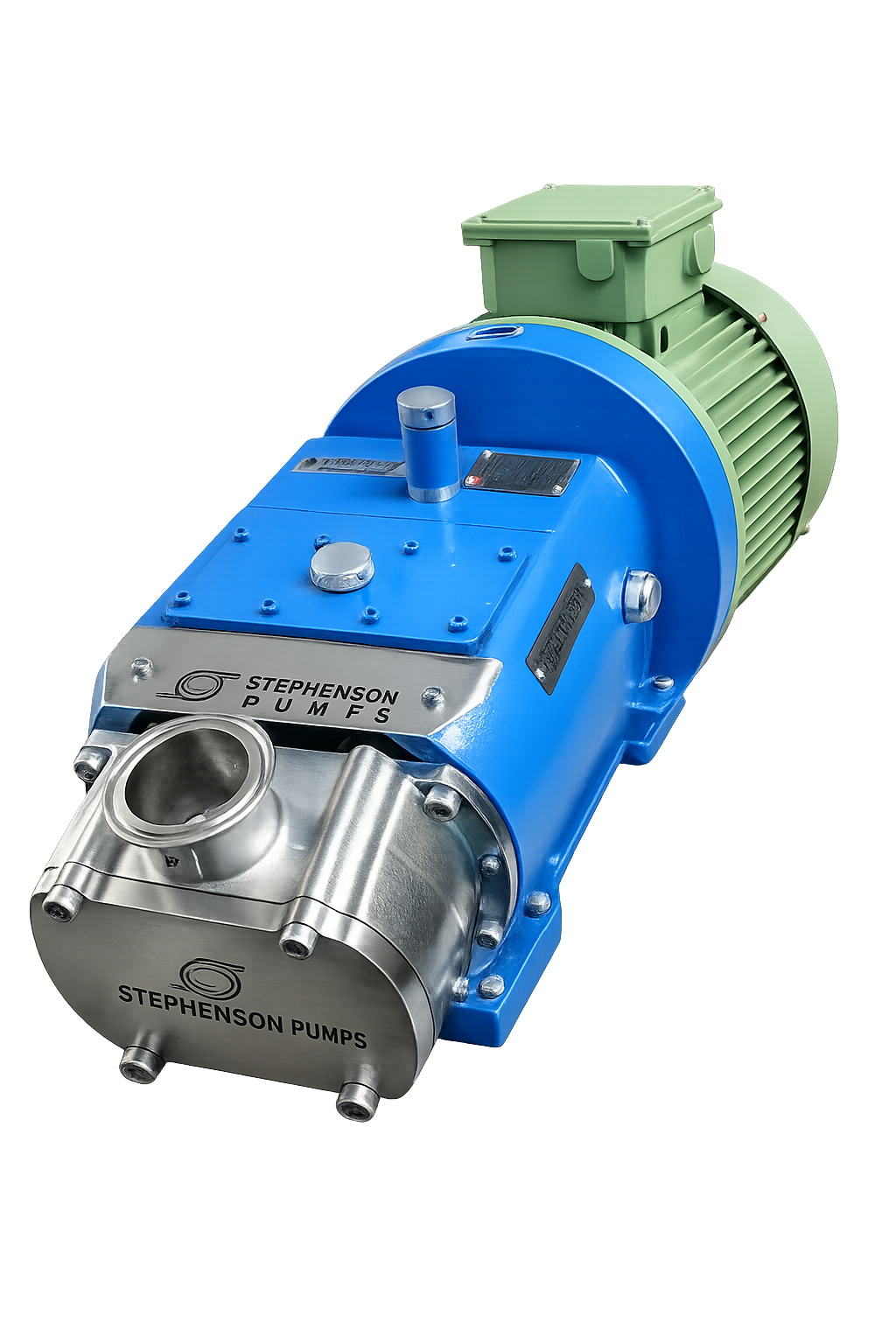
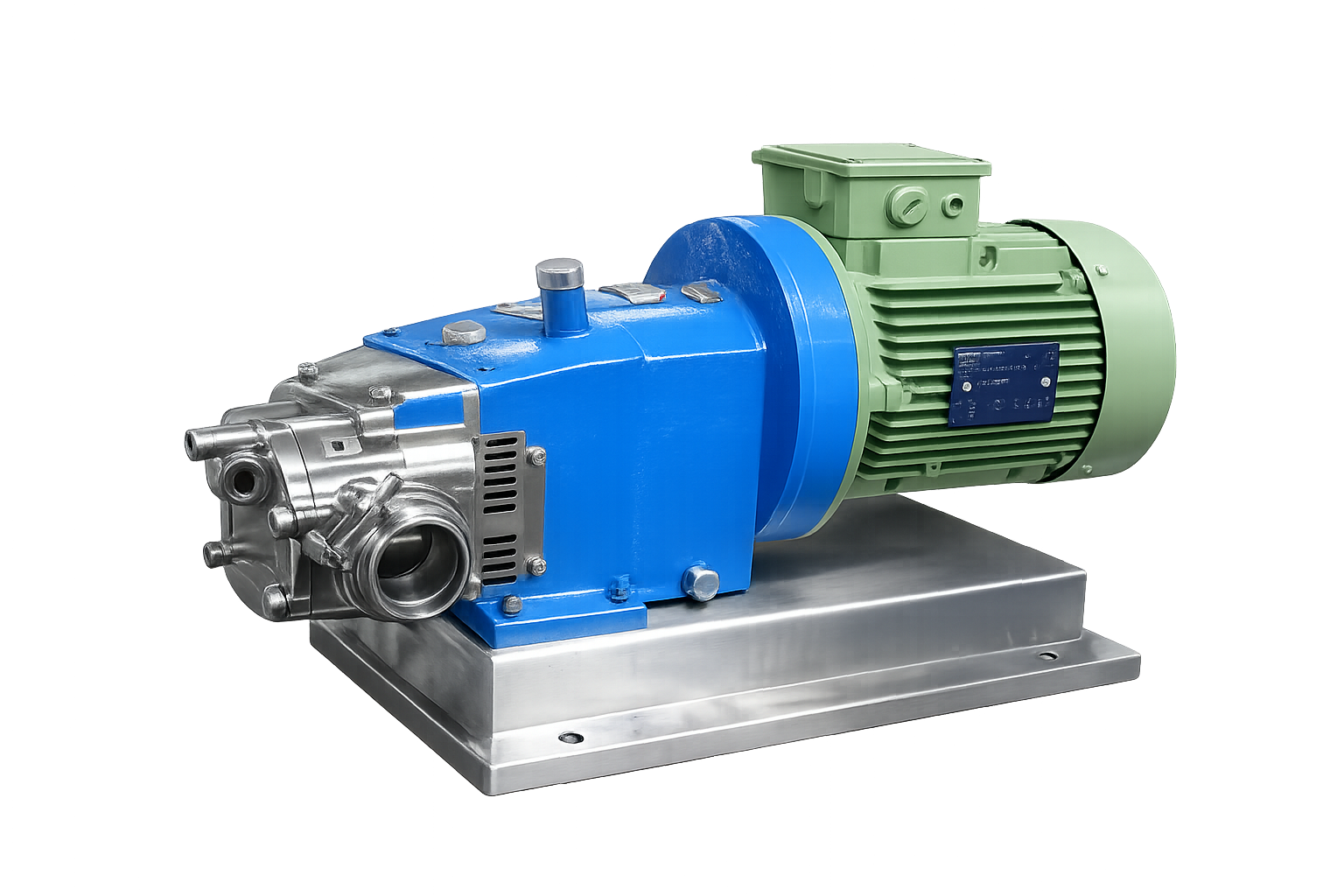
The hydraulic performance of a lobe pump depends on flow rate requirements, viscosity range, RPM configuration, discharge pressure, and duty cycle conditions. Industrial process environments often require customized pump configurations based on fluid rheology and pipeline resistance characteristics.
| Parameter | Entry Industrial | Standard Production | Heavy Duty Process | Pharma / Hygienic | Chemical Duty |
|---|---|---|---|---|---|
| Flow Rate Range | 0.5–5 m³/hr | 5–30 m³/hr | 30–100 m³/hr | 1–80 m³/hr | 5–120 m³/hr |
| Max Discharge Pressure | 3–6 bar | 6–10 bar | 10–15 bar | 6–12 bar | 8–16 bar |
| Viscosity Handling Range | 1–5,000 cP | 5,000–50,000 cP | 50,000–500,000 cP | 1–200,000 cP | 10,000–1,000,000+ cP |
| RPM Operating Range | 50–250 RPM | 100–400 RPM | 200–600 RPM | 50–350 RPM | 100–500 RPM |
| Flow Behavior Type | Mild pulsation | Stable displacement | Precision flow | Ultra-low shear | High torque stability |
| Duty Cycle Capability | Intermittent | 8–16 hrs/day | 24/7 continuous | Batch + continuous | Continuous industrial |
| NPSH Requirement | Low | Low–Medium | Medium | Very Low | Medium |
| Efficiency Range | 55–70% | 65–80% | 70–85% | 60–80% | 65–85% |
Material selection directly affects corrosion resistance, hygienic performance, thermal stability, and lifecycle reliability. Industrial lobe pumps are typically manufactured using stainless steel grades such as SS304 and SS316L, while more aggressive chemical environments may require duplex or coated alloy configurations.
| Component | Base Material Grade | Industrial Upgrade Option | Hygienic Upgrade Option | Chemical Resistance Level | Temperature Tolerance |
|---|---|---|---|---|---|
| Pump Body | SS304 | SS316 | SS316L Electropolished | Medium–High | Up to 200°C |
| Rotor Assembly | SS316L | Duplex Steel | PTFE Coated SS316L | High–Very High | Up to 220°C |
| Shaft | EN8 Steel | SS304 | SS316 Forged | Medium–High torque | Up to 180°C |
| Mechanical Seal | NBR / EPDM | Viton | FDA-grade PTFE | Medium–High | 120–250°C |
| Bearing System | Standard steel | Sealed industrial bearing | Heavy-duty stainless bearing | Mechanical wear resistance | 120°C max |
| Gasket System | Rubber | Viton | Silicone FDA grade | Chemical sealing compatibility | 150–250°C |
| Fasteners | SS304 | SS316 | Passivated SS316L | Corrosion resistance | High temperature stable |
Lobe pumps are widely used in applications where fluid behavior changes under shear, temperature, or pressure variation. Many industrial fluids are non-Newtonian, meaning their viscosity changes dynamically during movement. Standard pumping systems often fail under such conditions because they cannot maintain stable displacement behavior.
In dairy processing, maintaining fat globule integrity is essential to avoid product separation. In chocolate and syrup transfer systems, temperature variation can alter viscosity rapidly, requiring stable low-shear pumping conditions. Pharmaceutical gels and suspensions require contamination-free flow paths along with precise volumetric movement.
High-viscosity, low-shear and hygienic pump systems are selected for each industry based on fluid rheology, cleaning demand, and process sensitivity.
| Fluid Type | Viscosity Range (cP) | Flow Behavior | Shear Sensitivity | Recommended Pump Configuration |
|---|---|---|---|---|
| Milk | 10–100 | Newtonian | High | Low shear SS316L system |
| Cream | 100–1,000 | Emulsion | Very High | Hygienic low RPM design |
| Chocolate | 1,000–50,000 | Non-Newtonian | High | Heated jacket pump system |
| Syrup | 500–20,000 | Pseudo-plastic | Medium | Temperature controlled pump |
| Pharma Gel | 5,000–200,000 | Viscoelastic | Very High | CIP/SIP stainless system |
| Polymer Resin | 50,000–1,000,000+ | Viscoelastic | Medium | Reinforced shaft system |
| Adhesive | 100,000–1,000,000+ | Cohesive flow | Low–Medium | High torque configuration |
Selecting the correct pump technology depends on fluid structure, hygiene requirements, process consistency, and maintenance expectations. While gear pumps are commonly used for oil transfer and progressive cavity pumps are suitable for abrasive slurries, lobe pumps provide superior balance between hygienic operation, low shear performance, and volumetric stability.
| Engineering Parameter | Lobe Pump | Gear Pump | Progressive Cavity Pump | Centrifugal Pump |
|---|---|---|---|---|
| Flow Stability | Very High | Medium | High | Low |
| Shear Force Level | Very Low | Very High | Medium | High |
| Viscosity Handling | Excellent | Medium | Excellent | Poor |
| CIP/SIP Compatibility | Full | Limited | Partial | None |
| Maintenance Complexity | Low | Medium | High | Low–Medium |
| Energy Efficiency | Medium–High | Medium | Medium | High |
| Initial Cost | Medium | Low | High | Low |
| Process Accuracy | Very High | Medium | High | Low |
Precision manufacturing is critical in rotary lobe pump engineering because rotor geometry directly affects hydraulic efficiency and flow consistency. CNC-machined components undergo dimensional inspection to ensure micron-level tolerance control.
| Stage | Methodology | Acceptance Criteria | Engineering Outcome |
|---|---|---|---|
| Raw Material Inspection | PMI + Spectro analysis | Grade conformity | Material traceability |
| CNC Machining | Coordinate measurement | ±0.01 mm tolerance | Dimensional accuracy |
| Rotor Balancing | Dynamic balancing system | ISO vibration class compliance | Smooth operation |
| Pressure Testing | Hydrostatic test | No leakage at 1.5x rated pressure | Safety validation |
| Performance Testing | Flow curve mapping | ±3% deviation limit | Efficiency certification |
Industrial pumping failures are rarely random. Most failures originate from improper sizing, incorrect RPM selection, seal incompatibility, or mismatch between fluid rheology and rotor geometry.
| Failure Mode | Root Cause | Trigger Condition | Detection Method | Prevention Strategy |
|---|---|---|---|---|
| Cavitation | Low inlet pressure imbalance | High suction lift | Noise & vibration | Proper NPSH design |
| Seal Leakage | Thermal & pressure cycling | Continuous operation | Pressure drop monitoring | Cartridge seal upgrade |
| Rotor Wear | Abrasive fluid handling | Chemical slurry | Flow deviation | Hardened rotor use |
| Shaft Misalignment | Improper installation | High torque load | Vibration analysis | Precision alignment |
| Flow Inconsistency | Wrong RPM-viscosity match | Process variation | Flow meter deviation | Engineering sizing |
| Overheating | Excess torque load | High viscosity startup | Temperature sensor | Cooling system integration |
Selecting the correct rotary lobe pump requires detailed evaluation of viscosity behavior, discharge pressure, suction conditions, temperature variation, pipeline resistance, and cleaning requirements. Engineering consultation ensures proper system configuration, stable hydraulic performance, and long-term operational reliability across industrial process environments.