
Twin screw pumps are engineered for demanding industrial environments where process stability, controlled fluid handling, and continuous-duty reliability are critical to plant operation. Unlike conventional pumping systems that struggle under fluctuating viscosity, vapor entrainment, or high-temperature hydrocarbon transfer conditions, twin screw pumps provide stable axial flow with low pulsation and consistent volumetric efficiency across varying operating parameters.
In industries such as oil & gas, marine, petrochemical, refinery, thermal power, and heavy process manufacturing, fluid transfer systems are exposed to extreme process conditions including high-viscosity hydrocarbons, thermal oil circulation, multiphase flow, and low NPSH operating environments. Under these conditions, hydraulic instability or cavitation can significantly affect production continuity and increase operational downtime.
As a twin screw pump manufacturer in India, the engineering focus extends beyond pump manufacturing into complete process-flow optimization. Different industrial operations require different screw geometries, pressure capabilities, and thermal handling characteristics. For refinery and high-pressure hydrocarbon transfer systems, the TWIN SCREW PUMP – TSO SERIES is designed for stable volumetric flow under demanding pressure conditions. In applications involving viscosity fluctuation and multiphase media handling, the TWIN SCREW PUMP – TSMP SERIES provides operational flexibility with controlled axial displacement. For large-scale terminal transfer and high-capacity unloading operations, the TWIN SCREW PUMP – DOUBLE FLOW configuration supports continuous bulk fluid movement with improved throughput efficiency.
High-performance twin screw pumps designed for refinery-grade API process systems with low NPSH and continuous-duty reliability.
Stable axial displacement for crude oil, bitumen, fuel oil and thermal fluids across high viscosity ranges.
Twin screw pumps operate on a positive displacement principle where two precision-machined screws rotate in opposite directions inside a closely toleranced casing. As the screws rotate, sealed cavities are formed between the screw profile and pump housing. These cavities move fluid axially from suction to discharge in a smooth and continuous flow pattern.
Unlike gear-based pumping systems where internal metal contact creates higher wear and pulsation, twin screw pumps utilize timing gears that synchronize screw rotation without direct screw-to-screw contact. This significantly reduces mechanical wear while allowing stable operation across low and high viscosity ranges.
The axial flow mechanism is especially important in high-temperature hydrocarbon systems because it minimizes turbulence and maintains consistent displacement even when viscosity changes during operation. This enables twin screw pumps to handle heavy fuel oil, crude oil, bitumen, lubricating oil, condensate, and thermal fluids under continuous industrial duty conditions.
| Engineering Parameter | Twin Screw Pump Behavior | Industrial Impact | Process-Level Advantage | Operational Benefit |
|---|---|---|---|---|
| Flow Mechanism | Axial positive displacement | Stable volumetric transfer | Consistent hydraulic behavior | Reduced pulsation |
| Screw Synchronization | Timing gear controlled | No metal contact | Lower wear generation | Extended lifecycle |
| Flow Characteristic | Continuous smooth flow | Minimal turbulence | Stable pipeline pressure | Improved process stability |
| Cavitation Resistance | Low NPSHR operation | Better suction performance | Reduced vapor formation | Improved reliability |
| Viscosity Adaptability | Wide operating range | Handles variable media | Stable displacement efficiency | Multi-fluid capability |
| Thermal Stability | Controlled axial expansion | High-temperature compatibility | Reduced distortion | Safer operation |
| Vapor Handling | Self-priming capability | Handles entrained gases | Prevents dry running instability | Continuous operation |
Designed for stable suction and cavitation-resistant operation in refinery and heavy oil transfer systems.
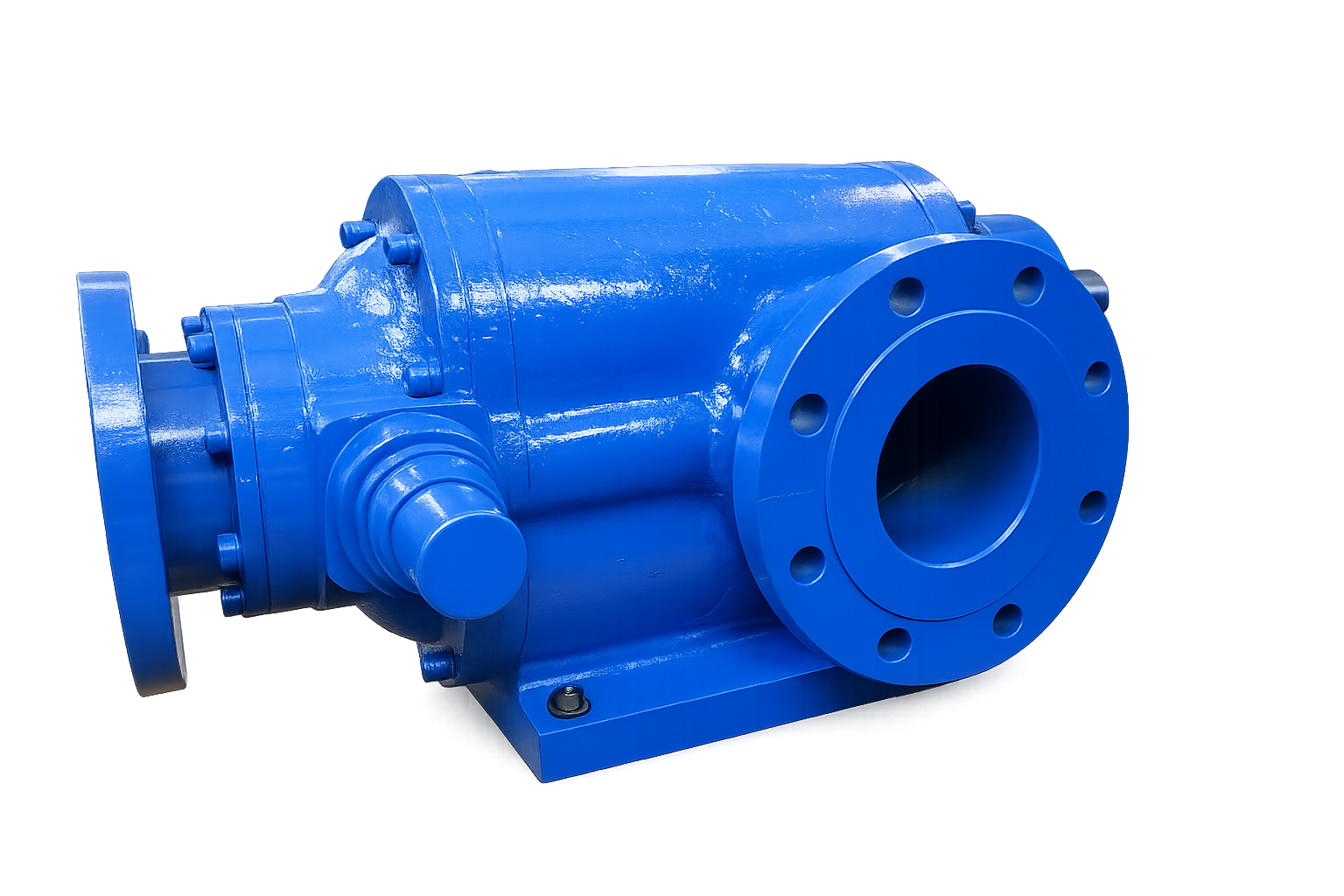
Engineered for smooth axial displacement of high-viscosity fluids such as bitumen, thermal oils, and heavy fuel oils.
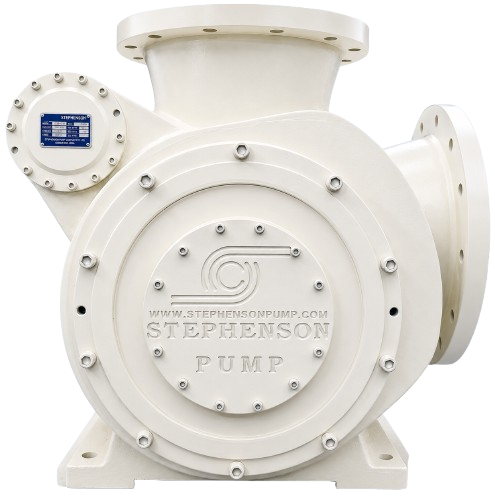
Built to API 676 guidelines for reliability, seal integrity, and long-term industrial process performance.
Twin screw pumps used in industrial hydrocarbon transfer applications are engineered according to flow rate requirements, differential pressure, fluid rheology, thermal operating range, and suction conditions. Unlike standardized commercial pumps, industrial twin screw systems are configured according to process-specific operating parameters.
| Parameter | Light Industrial Duty | Refinery Process Grade | High-Temperature Hydrocarbon Grade | Marine Transfer Grade | Heavy Viscosity Bitumen Grade | Engineering Significance |
|---|---|---|---|---|---|---|
| Flow Capacity | 5–50 m³/hr | 50–300 m³/hr | 100–600 m³/hr | 50–500 m³/hr | 10–250 m³/hr | Defines process throughput |
| Differential Pressure | 6–10 bar | 10–16 bar | 16–25 bar | 8–16 bar | 12–24 bar | Determines discharge resistance handling |
| Temperature Range | -10°C to 120°C | Up to 180°C | Up to 350°C | Up to 150°C | Up to 400°C | Thermal fluid compatibility |
| Viscosity Handling | 10–5,000 cSt | 5,000–50,000 cSt | 50,000–200,000 cSt | Variable viscosity | 100,000–1,000,000+ cSt | Torque requirement increases with viscosity |
| RPM Range | 300–1800 RPM | 200–1500 RPM | 100–1200 RPM | 200–1800 RPM | 50–500 RPM | Lower RPM reduces shear and heat |
| NPSHR Requirement | Low | Very Low | Very Low | Low | Extremely Low | Cavitation prevention capability |
| Self-Priming Capability | Yes | Yes | Yes | Yes | Yes | Startup stability |
| Dry Running Tolerance | Limited | Moderate | Moderate | Moderate | High with cooling support | Operational continuity |
| Component | Standard Construction | API-Oriented Upgrade | High Temperature Upgrade | Corrosion Resistant Upgrade | Industrial Function |
|---|---|---|---|---|---|
| Pump Casing | Cast Steel | ASTM A216 WCB | High-temperature alloy steel | Duplex stainless steel | Pressure containment |
| Screw Element | Hardened alloy steel | Nitrided screw profile | Thermal-treated alloy | Duplex / Super Duplex | Volumetric displacement |
| Shaft Material | EN24 forged steel | API-grade forged shaft | Heat-resistant shaft | SS316L / Duplex shaft | Torque transmission |
| Timing Gear | Helical alloy steel | Precision ground gear | High-load thermal gear | Hardened steel | Screw synchronization |
| Bearing Housing | Standard industrial | Heavy-duty API housing | Thermal expansion compensated | Corrosion resistant | Vibration stability |
| Mechanical Seal | Single seal arrangement | API 682 cartridge seal | Thermal barrier seal | Double seal system | Leakage prevention |
| Fasteners | High tensile steel | ASTM fasteners | Thermal coated fasteners | Corrosion resistant fasteners | Structural integrity |
Twin screw pumps are selected in industrial operations where process continuity depends on controlled transfer of high-viscosity, lubricating, volatile, or thermally sensitive fluids. In these systems, flow instability can lead to cavitation, pressure fluctuation, thermal degradation, or operational shutdown.
In crude oil transfer systems, the pump must maintain stable displacement despite varying fluid density and temperature conditions. Heavy fuel oils and refinery by-products often exhibit high viscosity during startup conditions, requiring low NPSHR performance and stable suction capability. Twin screw pumps maintain continuous axial flow even when vapor entrainment or multiphase conditions occur within the pipeline.
Marine cargo transfer systems also rely heavily on twin screw technology because fluid viscosity changes significantly depending on ambient temperature and cargo composition. Stable volumetric displacement ensures controlled unloading operations with minimal pulsation.
Bitumen and asphalt transfer systems present even more challenging conditions because the fluid must remain at elevated temperature to maintain pumpability. Under these conditions, thermal expansion management and screw clearance stability become critical engineering considerations.
| Industry | Fluid Type | Operating Challenge | Twin Screw Pump Engineering Response | Process Outcome |
|---|---|---|---|---|
| Oil & Gas | Crude oil, condensate | Viscosity fluctuation | Stable axial displacement | Continuous transfer |
| Refinery | Heavy fuel oil | Thermal instability | Low NPSHR + thermal stability | Cavitation prevention |
| Marine | Cargo fuel transfer | Variable density fluid | Smooth pulsation-free flow | Stable unloading |
| Petrochemical | Lubricating oils | Pressure fluctuation | Controlled volumetric efficiency | Process stability |
| Power Plants | Thermal oil | High-temperature operation | Expansion compensated screw design | Continuous duty reliability |
| Asphalt & Bitumen | Heated bitumen | Extreme viscosity | High torque low RPM configuration | Stable transfer performance |
Selecting the correct twin screw pump configuration depends on process pressure, viscosity range, operating temperature, suction conditions, and throughput requirement. Different industrial applications require different hydraulic and mechanical configurations to maintain operational efficiency.
The TWIN SCREW PUMP – TSO SERIES is generally selected for refinery operations, thermal oil circulation, heavy hydrocarbon transfer, and high-pressure process systems where continuous-duty stability is critical. Its design focuses on maintaining volumetric efficiency under demanding thermal and pressure conditions.
For industrial applications involving viscosity variation, multiphase media, or unstable suction conditions, the TWIN SCREW PUMP – TSMP SERIES provides improved adaptability with stable hydraulic balance and enhanced fluid handling flexibility.
In high-capacity transfer operations such as marine unloading terminals, storage depots, and bulk hydrocarbon transfer facilities, the TWIN SCREW PUMP – DOUBLE FLOW configuration is used to increase throughput while maintaining low pulsation and stable discharge characteristics.
| Process Requirement | TSO SERIES | TSMP SERIES | DOUBLE FLOW SERIES | Engineering Advantage |
|---|---|---|---|---|
| High pressure refinery transfer | Excellent | High | Medium | Stable high-pressure displacement |
| Variable viscosity handling | High | Excellent | Medium | Adaptive flow control |
| Marine unloading operations | Medium | High | Excellent | High throughput transfer |
| Thermal oil circulation | Excellent | High | Medium | Thermal stability |
| Multiphase fluid handling | Medium | Excellent | Medium | Vapor handling capability |
| Bulk terminal transfer | Medium | Medium | Excellent | Large volume movement |
| Continuous-duty operation | Excellent | Excellent | High | Reduced operational downtime |
Although both twin screw and three screw pumps operate on positive displacement principles, their hydraulic behavior and industrial application suitability differ significantly.
| Engineering Parameter | Twin Screw Pump | Three Screw Pump | Industrial Impact |
|---|---|---|---|
| Fluid Viscosity Range | Very wide | Medium | Broader application capability |
| Multiphase Handling | Excellent | Limited | Vapor tolerance advantage |
| Solids Handling | Moderate | Low | Better process adaptability |
| Pulsation Control | Excellent | Excellent | Stable hydraulic flow |
| Thermal Fluid Handling | High | Medium | Better high-temperature capability |
| API Process Suitability | Very High | High | Refinery compatibility |
| Cavitation Resistance | Excellent | Medium | Improved suction performance |
| Maintenance Complexity | Medium | Low | Lifecycle management factor |
| Operational Flexibility | Very High | Medium | Multi-process suitability |
The performance of a twin screw pump depends not only on the pump itself but also on the surrounding piping system, suction design, thermal conditions, and process operating stability.
Improper suction piping design can create turbulence and vapor pockets that reduce volumetric efficiency. Low NPSH availability in refinery systems can significantly increase cavitation risk if suction velocity is not controlled properly.
In high-temperature hydrocarbon systems, thermal expansion of casing and screw elements must be carefully managed to maintain proper internal clearances. Excessive expansion can increase friction and affect hydraulic stability during startup conditions.
Viscosity variation also plays a major role in RPM selection. Higher viscosity fluids require lower rotational speeds to maintain stable displacement and prevent excessive torque loading.
| System Variable | Engineering Risk | Twin Screw Pump Response | Operational Benefit |
|---|---|---|---|
| Low NPSH | Cavitation | Low suction requirement | Stable inlet flow |
| High viscosity startup | Torque overload | Low RPM operation | Controlled displacement |
| Thermal expansion | Clearance instability | Expansion compensated design | Stable operation |
| Vapor entrainment | Flow instability | Multiphase handling capability | Reduced process interruption |
| Pressure fluctuation | Hydraulic imbalance | Axial flow stabilization | Continuous duty reliability |
API 676 compliance is one of the most important engineering requirements in refinery, petrochemical, and oil & gas operations because it establishes minimum standards for rotary positive displacement pump performance, material integrity, seal arrangement, vibration control, and operational reliability.
Industrial operators prioritize API-oriented systems because operational failure in hydrocarbon transfer applications can result in production shutdown, environmental risk, and safety hazards. Twin screw pumps designed according to API engineering principles provide improved reliability under demanding process conditions.
| Reliability Factor | Engineering Objective | Operational Impact |
|---|---|---|
| Shaft Stability | Reduced vibration | Longer bearing life |
| Seal Integrity | Leakage prevention | Improved safety |
| Thermal Stability | Expansion management | Continuous operation |
| Bearing Protection | Load distribution | Reduced maintenance |
| Vibration Control | Dynamic balance | Lower mechanical stress |
| Pressure Containment | Structural integrity | High-pressure reliability |
Selecting the correct twin screw pump configuration requires detailed evaluation of fluid viscosity, operating temperature, pressure differential, suction conditions, and system layout. Engineering consultation helps optimize hydraulic performance, reduce operational risk, improve lifecycle reliability, and ensure proper integration into existing industrial process systems.
Contact us directly at +91 9820751925 or info@stephensonpump.com.