
DOUBLE FLOW Twin Screw Pump Manufacturer in India | High-Capacity Bulk Transfer & Pipeline Systems
The DOUBLE FLOW Twin Screw Pump is engineered for high-capacity bulk transfer, refinery pipelines, tank farms, and marine unloading systems. Designed for axial force balance, continuous duty operation, low NPSH performance, and stable high-volume fluid handling in demanding industrial infrastructure applications.
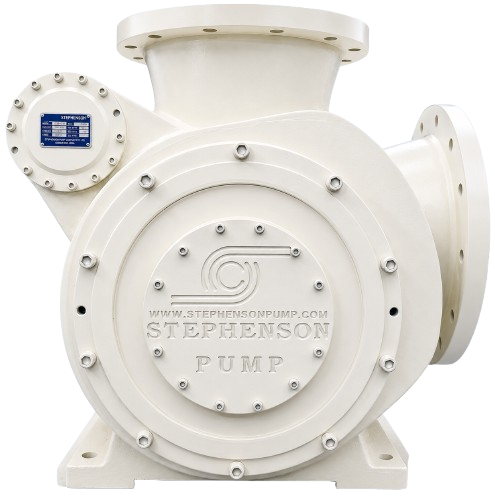
TWIN SCREW PUMP – DOUBLE FLOW for High-Capacity Axial Force Balanced Bulk Transfer Systems
The DOUBLE FLOW Twin Screw Pump is engineered for infrastructure-scale fluid transfer systems where extremely high flow rates, continuous duty cycles, and mechanical stability across long pipeline distances are non-negotiable. Unlike standard twin screw pump configurations, DOUBLE FLOW is positioned for bulk transfer dominance where hydraulic balance and axial force cancellation are primary engineering requirements.
The DOUBLE FLOW Twin Screw Pump operates on a dual suction, central discharge hydraulic architecture where fluid enters from both ends of the rotor assembly and converges toward a single discharge point. This geometry fundamentally changes the internal force distribution, allowing symmetrical hydraulic loading across the screw profile.
Unlike single-flow twin screw pumps such as the TSMP or TSO configurations, where axial thrust is transmitted in one direction, the DOUBLE FLOW system eliminates directional imbalance by distributing hydraulic energy evenly across both rotor ends. This reduces bearing load, minimizes shaft deflection, and significantly improves operational stability under high-flow conditions.
DOUBLE FLOW Hydraulic Behavior & System-Level Impact
| Engineering Parameter | DOUBLE FLOW Hydraulic Behavior | System-Level Impact |
|---|---|---|
| Flow Entry Configuration | Dual inlet suction | Balanced hydraulic intake |
| Discharge Geometry | Centralized outlet | Symmetrical flow convergence |
| Axial Force Distribution | Bi-directional cancellation | Near-zero net thrust |
| Rotor Load Condition | Evenly distributed | Reduced mechanical fatigue |
| Flow Stability Index | High continuity volumetric flow | Pipeline stability |
| Pressure Development | Gradual controlled buildup | Reduced hydraulic shock |
| Operating Mode | Continuous duty heavy flow | Infrastructure-grade use |
| Vibration Characteristics | Low amplitude operation | Reduced system stress |
Double Flow Hydraulic Design and Axial Force Balance Principle
The engineering foundation of the DOUBLE FLOW Twin Screw Pump is axial hydraulic force cancellation through symmetrical flow entry. In conventional single-flow twin screw pumps, fluid enters from one side, generating a unidirectional axial thrust that must be absorbed by bearings and mechanical support systems.
| Hydraulic Design Factor | Single Flow Configuration | DOUBLE FLOW Configuration | Engineering Outcome |
|---|---|---|---|
| Axial Thrust Generation | Unidirectional force | Bidirectional cancellation | Reduced bearing load |
| Shaft Loading Pattern | Asymmetric stress | Symmetrical distribution | Improved alignment stability |
| Bearing Stress Level | High continuous axial load | Near-balanced load condition | Extended bearing life |
| Rotor Deflection Risk | Elevated under high flow | Minimal under balanced flow | Higher mechanical precision |
| Hydraulic Force Vector | Single directional flow stress | Opposing balanced vectors | System stability |
| Long-Duty Operation | Progressive wear accumulation | Load-neutral operation | Increased lifecycle |
Why DOUBLE FLOW Architecture is Critical for High-Volume Industrial Systems
High-capacity fluid transfer systems are not limited by flow alone—they are limited by mechanical stress accumulation, suction instability, and hydraulic imbalance over continuous operation cycles. The DOUBLE FLOW architecture directly addresses these limitations by distributing hydraulic load symmetrically across the rotor system.
This design reduces bearing stress and allows stable performance even under extreme discharge conditions. It is highly suitable for tank farms, marine unloading terminals, refinery transfer lines, and large chemical distribution networks where uninterrupted volumetric flow is more critical than compact pump footprint or extreme pressure boosting.
| Operational Challenge | Conventional Pump Limitation | DOUBLE FLOW Engineering Response |
|---|---|---|
| High Flow Continuous Duty | Bearing overload accumulation | Balanced axial force system |
| Long Pipeline Transfer | Pressure instability over distance | Stable volumetric discharge |
| Tank Farm Circulation | Flow inconsistency at scale | Continuous hydraulic balance |
| Marine Unloading Systems | Suction variation instability | Dual inlet stabilization |
| Thermal Load Variation | Expansion-induced misalignment | Symmetrical structural loading |
| High Viscosity Bulk Flow | Reduced efficiency under load | Stable displacement transfer |
Technical Performance Parameters of DOUBLE FLOW Series
| Parameter | Operating Range | Engineering Function |
|---|---|---|
| Flow Capacity | 100 – 1000 m³/hr | Bulk industrial transfer scale |
| Differential Pressure | Up to 25 bar | Pipeline resistance handling |
| Viscosity Range | 1 – 200,000 cSt | Broad fluid adaptability |
| Temperature Range | -20°C to 220°C | Thermal process tolerance |
| Solid Handling | Up to 8 mm | Contaminated fluid compatibility |
| Self-Priming Vacuum | Up to 0.08 MPa | Suction reliability |
| RPM Range | 100 – 1450 RPM | Process speed flexibility |
| Flow Characteristic | Continuous axial displacement | Non-pulsating pipeline flow |
| Duty Classification | Heavy continuous operation | Infrastructure-grade reliability |
| NPSH Requirement | Low | Cavitation resistance |
Flow Capacity, Viscosity Behavior & Bulk Transfer Performance
The DOUBLE FLOW Series is engineered for systems where volumetric stability is more critical than precision process control. In long-distance pipelines and bulk transfer terminals, viscosity variation, temperature fluctuation, and density shifts occur continuously during operation.
| Fluid Condition | System Challenge | DOUBLE FLOW Response |
|---|---|---|
| Low Viscosity Hydrocarbons | Flow instability at high speed | Controlled volumetric transfer |
| High Viscosity Oils | Internal slippage loss | Stable displacement efficiency |
| Variable Density Mixtures | Pressure fluctuation | Balanced hydraulic output |
| Long Distance Pipeline Flow | Frictional loss accumulation | Sustained discharge energy |
| Batch Tank Transfer | Flow inconsistency | Continuous volumetric stability |
NPSH Performance & Suction Stability in Bulk Transfer Systems
Suction stability is a critical design constraint in large-scale pumping systems. In marine unloading systems, tank farms, and refinery transfer lines, suction conditions are often unstable due to fluctuating fluid levels, long inlet pipelines, and variable viscosity conditions.
| Suction Condition | Conventional System Issue | DOUBLE FLOW Advantage |
|---|---|---|
| Low Tank Levels | Cavitation formation | Balanced dual suction intake |
| Long Suction Lines | Pressure loss instability | Distributed inlet load |
| High Viscosity Fluids | Restricted suction flow | Improved intake efficiency |
| Marine Offloading | Air ingestion instability | Stabilized inlet behavior |
| Variable Feed Conditions | Flow interruption risk | Continuous suction balance |
Gas Entrainment & Multiphase Flow Handling Capability
| Multiphase Condition | Operational Risk | DOUBLE FLOW Response |
|---|---|---|
| Entrained Gas Flow | Cavitation instability | Stable volumetric transfer |
| Slug Flow Conditions | Pressure fluctuation | Controlled axial continuity |
| Vapor Formation Zones | Flow separation | Balanced inlet stabilization |
| Mixed Hydrocarbon Streams | Density inconsistency | Continuous displacement control |
| Aerated Fluids | Loss of efficiency | Reduced hydraulic disruption |
Material of Construction for Heavy-Duty Industrial Applications
| Component | Standard Material | Heavy-Duty Option | Engineering Purpose |
|---|---|---|---|
| Pump Casing | Cast Iron | ASTM A216 WCB Steel | Structural pressure containment |
| Screw Rotor | Alloy Steel | Hardened Tool Steel | High-load displacement |
| Shaft Assembly | EN8 / EN24 | Heat-treated Alloy Steel | Torque transmission |
| Timing Gear System | Hardened Steel | Precision alloy gear system | Synchronization control |
| Bearing System | Industrial roller bearing | Heavy-duty thrust bearing | Axial stability |
| Seal System | Mechanical seal | API-compliant seal system | Leakage prevention |
API 676 Compliance & Industrial Design Standards
| Compliance Area | Engineering Standard | Functional Purpose |
|---|---|---|
| Pressure Design | API 676 aligned structure | Safe high-pressure operation |
| Mechanical Integrity | Controlled deflection limits | Structural reliability |
| Hydro Testing | Factory validated pressure testing | Safety assurance |
| Bearing Life | L10 life calculation basis | Long-term durability |
| Seal Arrangement | API-compatible sealing system | Leakage control |
System Integration in Pipeline, Tank Farm & Marine Transfer Applications
The DOUBLE FLOW Series is designed for direct integration into high-capacity industrial transfer networks where continuous flow is required across extended operational cycles. It is optimized for tank farms, marine terminals, refineries, petrochemical plants, and storage depots.
Within a complete Twin Screw Pump ecosystem, DOUBLE FLOW works alongside TSO Series and TSMP Series to cover the full spectrum of industrial fluid transfer requirements. This model is best when volumetric flow dominance and hydraulic balance are more important than compact pump footprint.
| System Type | Application Role | Engineering Benefit |
|---|---|---|
| Tank Farms | Bulk transfer circulation | Stable high-volume flow |
| Marine Terminals | Ship unloading systems | Reduced suction instability |
| Refineries | Crude oil transfer lines | Continuous pipeline operation |
| Petrochemical Plants | Process distribution systems | Balanced hydraulic output |
| Storage Depots | Large-scale transfer grids | Efficient load movement |
DOUBLE FLOW vs Other Twin Screw Pump Configurations
| Parameter | DOUBLE FLOW | TSMP Series | TSO Series |
|---|---|---|---|
| Primary Function | Bulk high-volume transfer | Variable process handling | High-pressure thermal duty |
| Flow Capacity Focus | Very high | Medium-high | Medium |
| Hydraulic Balance | Excellent | Moderate | High |
| Multiphase Handling | High | Excellent | Moderate |
| Thermal Resistance | Moderate | Moderate | Very High |
| Best Application | Tank farms, pipelines | Process industries | Refinery systems |
Operational Reliability & Lifecycle Performance Advantages
| Reliability Factor | Engineering Benefit | Operational Outcome |
|---|---|---|
| Axial Force Balance | Reduced bearing load | Extended equipment life |
| Dual Inlet System | Stable suction behavior | Reduced cavitation risk |
| Heavy-Duty Structure | High mechanical endurance | Lower failure probability |
| Continuous Duty Design | Stable long-cycle operation | High uptime efficiency |
| Low Pulsation Flow | Reduced pipeline vibration | Infrastructure protection |
Frequently Asked Questions
Q1: Why is DOUBLE FLOW used in large industrial systems?
Because it provides axial force balance and stable high-volume transfer capability, making it suitable for continuous industrial pipelines.
Q2: Is DOUBLE FLOW suitable for refinery applications?
Yes, it is commonly used in refinery transfer lines, tank farms, and marine unloading systems.
Q3: Can it handle high-viscosity fluids?
Yes, it is designed for both low and high-viscosity industrial fluids including crude oil and bitumen.
Q4: How is it different from TSMP and TSO series?
TSMP handles process variability, TSO handles high pressure/thermal duty, while DOUBLE FLOW focuses on bulk flow and axial force balance.
Q5: Does it support multiphase fluids?
Yes, it can handle entrained gas and multiphase flow with stable hydraulic performance.