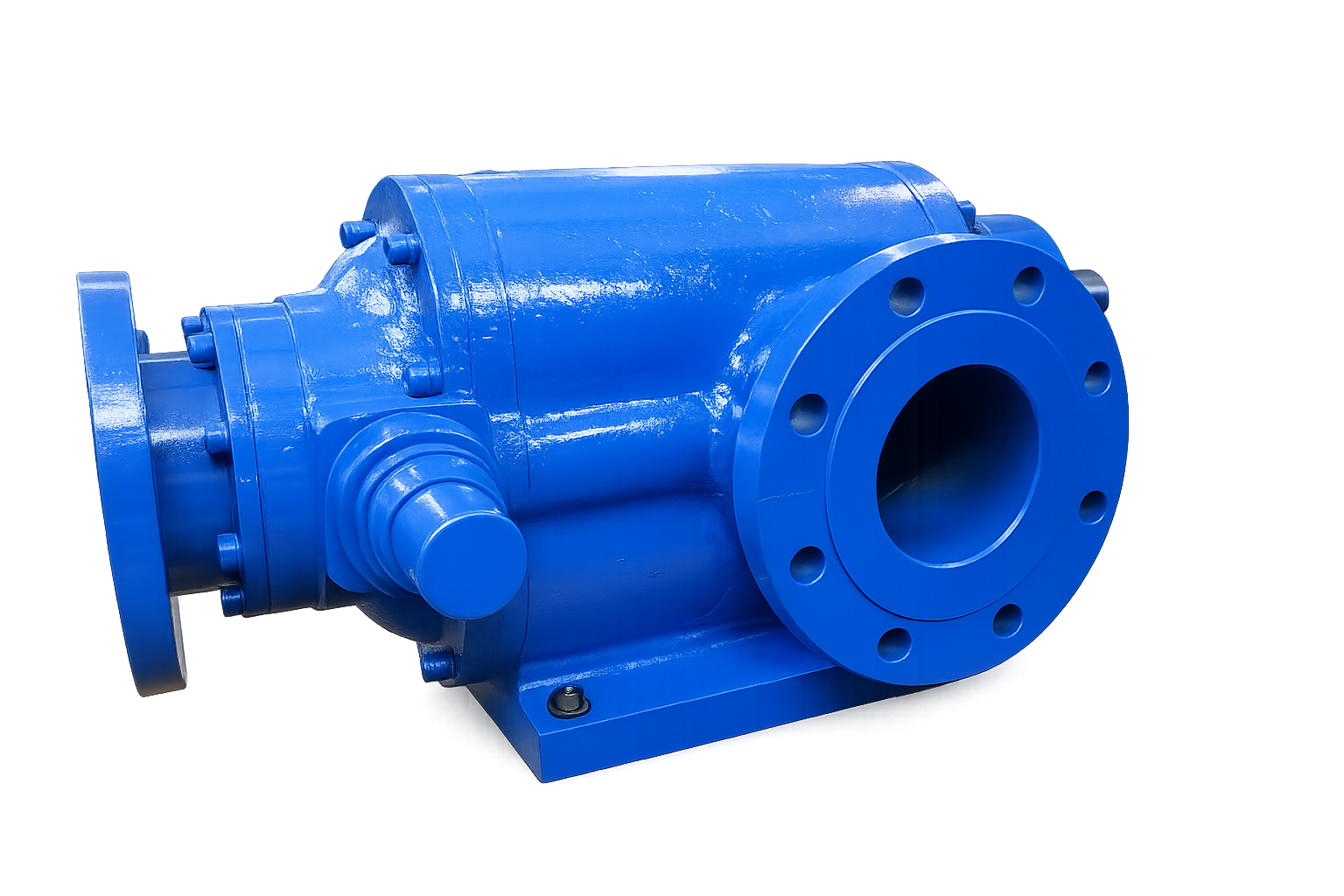
Leading screw pump manufacturer in India delivering high-efficiency multi screw and twin screw pump systems for oil, gas, marine, and chemical industries. Engineered for stable flow, high viscosity handling, and continuous industrial performance with proven reliability in critical operations.
Screw pumps are selected where plant operations depend on continuous, low-pulsation flow and predictable pressure response under changing temperature and viscosity conditions.
Our screw pump solutions are chosen for hydraulic stability, axial balance, and long bearing life in refinery, marine bunkering, and process plant environments.
Screw pump systems are used in industrial environments where fluid transfer cannot fail, fluctuate, or lose continuity under pressure variation. In real plant operations such as refinery pipelines, marine fuel systems, chemical processing units, and bulk transfer terminals, pump selection is based on fluid behavior under temperature, viscosity, and system pressure changes.
A screw pump manufacturer in India is evaluated not just on product availability, but on engineering understanding of hydraulic behavior, mechanical reliability, and lifecycle performance in continuous-duty systems. These pumps are often installed in mission-critical systems where downtime directly impacts production loss.
Unlike centrifugal pumps that rely on velocity conversion, screw pumps operate on positive displacement mechanics where fluid is physically moved through controlled cavities formed between rotating screws and casing walls. This allows stable output even when operating conditions are unstable.
Twin screw pump systems represent a high-performance class of multi-screw positive displacement
pumps designed for continuous industrial fluid transfer under stable hydraulic conditions.
These systems are commonly used in refinery transfer lines, marine bunkering systems, chemical circulation loops, and thermal fluid networks.
From an engineering perspective, twin screw pumps are selected when flow consistency is required across varying pressure conditions without introducing pulsation or hydraulic instability into downstream equipment. They are validated for high-pressure and multiphase fluid applications where conventional pump technologies fail to maintain stable volumetric performance.
| Engineering Parameter | Real Operating Behavior | Industrial Impact |
|---|---|---|
| Flow Profile | Continuous non-pulsating displacement | Stable downstream process |
| Viscosity Handling | Medium to high viscosity compatibility | Suitable for refinery and marine fluids |
| Pressure Response | Stable under fluctuating load | Protects pipeline integrity |
| Mechanical Load | Balanced axial forces | Longer bearing and seal life |
| Duty Cycle | Continuous 24/7 operation | Minimal downtime risk |
Screw pumps operate by trapping fluid between rotating screw elements and moving it axially through a sealed chamber. This mechanical principle eliminates turbulence and reduces shear stress, making them suitable for fluids that degrade under agitation or require stable transfer conditions.
In industrial systems, screw pumps are often selected when centrifugal pumps fail due to unstable suction conditions, high viscosity resistance, or multiphase flow instability. Their ability to maintain constant displacement makes them suitable for critical process systems where even minor flow variation can impact product quality or system safety.
One of the most common reasons for pump failure in industrial environments is incorrect selection rather than mechanical defect. Screw pump selection requires understanding of actual fluid behavior rather than theoretical flow calculations.
Engineers often face issues such as cavitation at suction lines, reduced volumetric efficiency due to incorrect clearance selection, or premature wear caused by mismatch between fluid abrasiveness and material selection. These issues highlight why screw pump selection must always be treated as a process engineering decision rather than a procurement decision.
Screw pump technology is divided into two fundamental engineering architectures based on fluid handling behavior and internal geometry. Multi screw systems are designed for clean, lubricating, and multiphase fluids where stable hydraulic displacement is required. Single screw systems are designed for abrasive, viscous, and high-solid-content fluids.
| Technology Type | Fluid Compatibility | Operational Behavior | Typical Use Case |
|---|---|---|---|
| Multi Screw Systems | Clean / lubricating / multiphase fluids | Stable continuous flow | Oil, marine, refinery |
| Single Screw Systems | Sludge / slurry / high solids | Controlled displacement | Wastewater, chemical dosing |
Twin screw pump systems are not a single configuration but a structured engineering family designed for different hydraulic and process conditions. Each series is developed to address specific combinations of pressure, viscosity, and fluid behavior.
Engineered for refinery and thermal circulation systems where fluid stability must be maintained under elevated temperature and high-pressure conditions. Commonly used in hydrocarbon processing, fuel transfer, and thermal oil circulation.
| Parameter | Operational Reality | Engineering Purpose |
|---|---|---|
| Pressure Capability | High pressure stability | Refinery pipeline systems |
| Temperature Handling | Elevated thermal range | Heat transfer systems |
| Fluid Type | Hydrocarbon-based fluids | Oil & gas applications |
| Operation Mode | Continuous duty cycles | Process stability assurance |
Designed for process industries where fluid conditions are not constant and may change during operation. This includes viscosity, density, and phase composition variations that require adaptive hydraulic performance.
| Parameter | System Behavior | Engineering Benefit |
|---|---|---|
| Viscosity Range | Variable operating conditions | Stable output under change |
| Flow Condition | Multiphase compatibility | Process flexibility |
| Industrial Usage | Chemical + process plants | Adaptive response |
Designed for large-scale industrial fluid transfer systems where high volume, continuous operation, and mechanical balance are critical. Typical applications include tank farms, marine unloading stations, and pipeline distribution networks.
| Parameter | Engineering Behavior | Operational Advantage |
|---|---|---|
| Flow Capacity | High-volume transfer | Bulk handling efficiency |
| Hydraulic Design | Axial force balance | Reduced mechanical stress |
| Application Scope | Terminal + pipeline systems | Long-distance reliability |
Pump selection depends entirely on fluid behavior, system pressure, and operational conditions rather than nominal pump size.
| Fluid Condition | Recommended System | Engineering Logic |
|---|---|---|
| Clean hydrocarbons | Multi screw systems | Stable displacement requirement |
| Slurry or sludge | Progressive cavity systems | Solid handling capability |
| Variable viscosity fluids | TSMP Series | Adaptive performance requirement |
| Bulk transfer systems | DOUBLE FLOW Series | High volume stability requirement |
Material selection determines corrosion resistance, mechanical durability, and lifecycle performance of screw pump systems under industrial operating conditions.
| Component | Material Options | Engineering Role |
|---|---|---|
| Casing | Cast Iron / SS316 | Structural integrity |
| Rotor | Alloy Steel | Torque transmission |
| Shaft | Hardened Steel | Load resistance |
Fluid viscosity directly influences internal slip, volumetric efficiency, and sealing performance inside screw pump systems. Higher viscosity fluids improve internal sealing efficiency, while low viscosity fluids may increase leakage depending on clearance design and operating pressure conditions.
Screw pump systems are widely used across oil and gas, chemical processing, marine fuel handling, and wastewater treatment industries where continuous fluid transfer reliability is essential for operational continuity.
Fuel transfer, refinery circulation, and injection systems that demand stable flow and multiphase handling.
Process circulation and chemical feed applications where viscosity and corrosion resistance matter.
Bunkering systems, fuel handling and hydraulic transfer requiring reliable 24/7 operation.
Progressive cavity solutions for sludge, slurry, and high-solid-content fluids.
Submit your process parameters including flow rate, viscosity, temperature, and system configuration to receive engineering-level pump selection and sizing support.
Contact us directly at +91 9820751925 or info@stephensonpump.com.